UDIMM, RDIMM and SO-DIMM: compare three actual DDR4 module specifications
Three 8 GB Kingston modules show why capacity, DDR generation and even pin count do not establish interchangeability.
Updated:
Identify buffering and physical format before comparing capacity
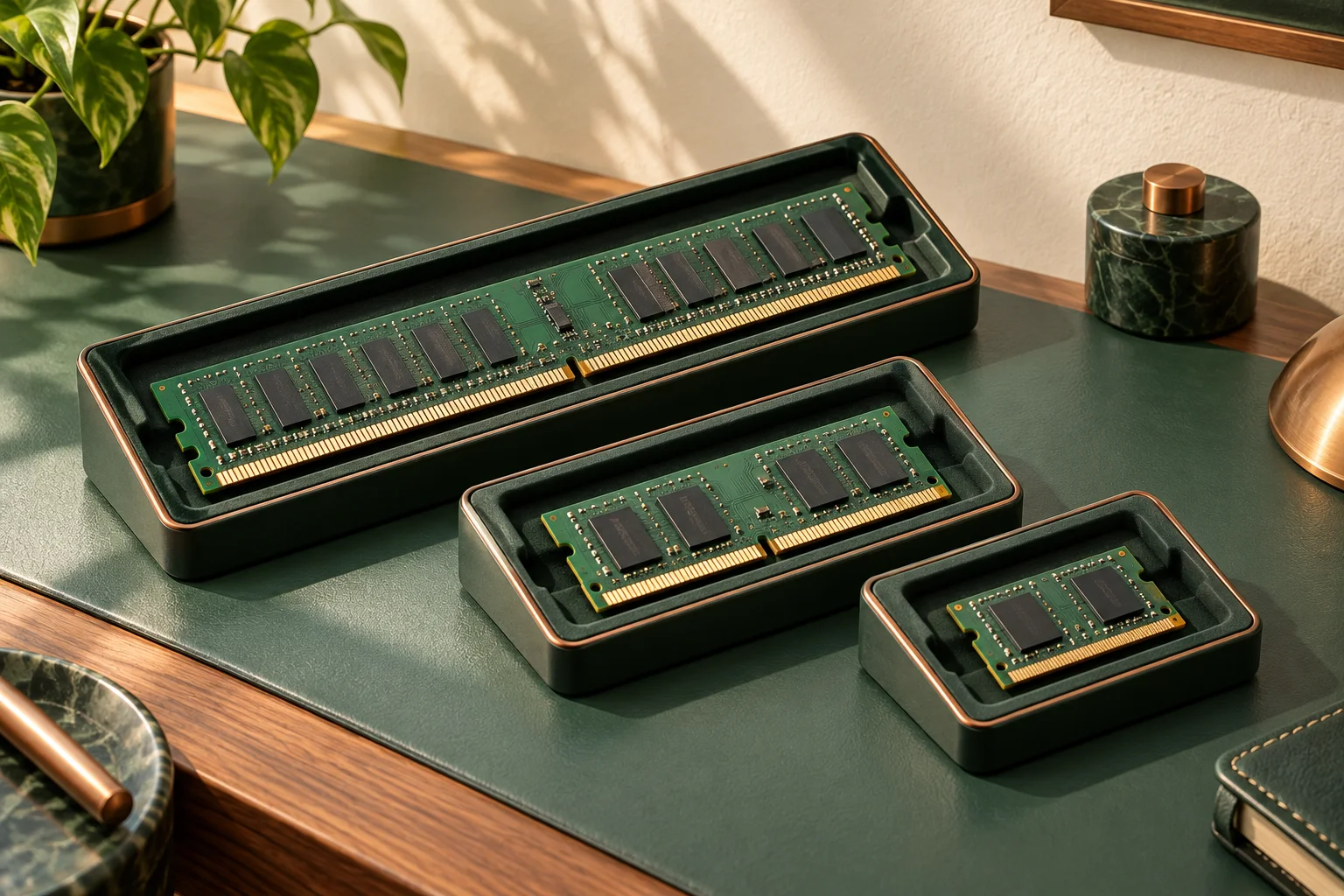
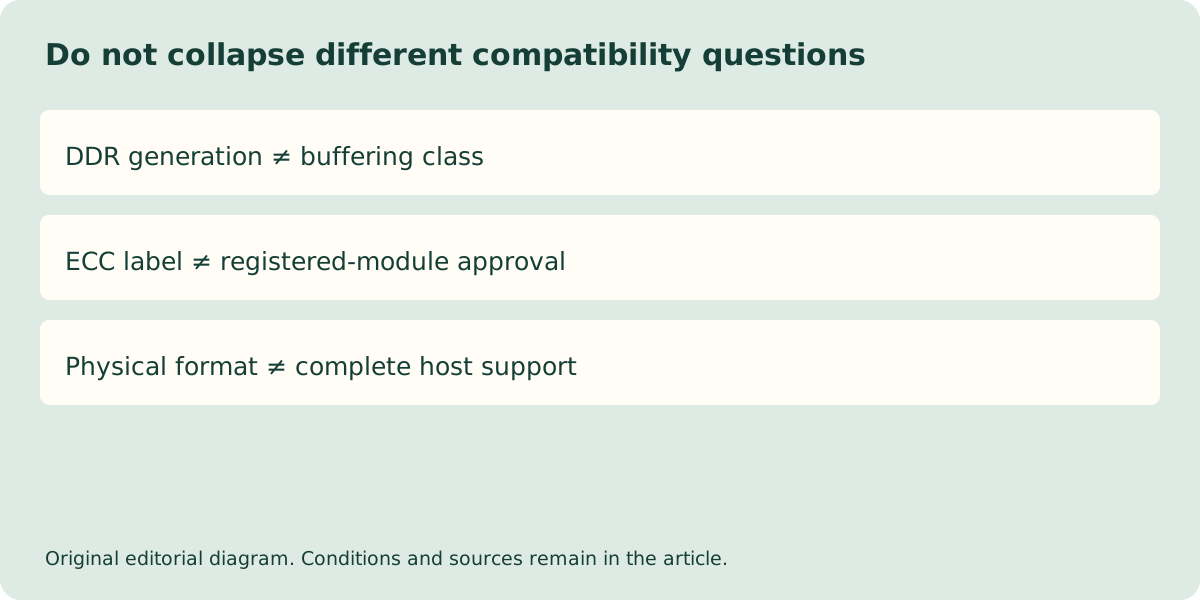
A registered DIMM is not a substitute for an unbuffered desktop DIMM, and a shorter SO-DIMM is another physical format. Capacity and DDR generation alone cannot select the correct replacement. For a used UK desktop or workstation, identify the exact system and its permitted memory class before considering an inexpensive listing. A similar outline is not approval to try a module.
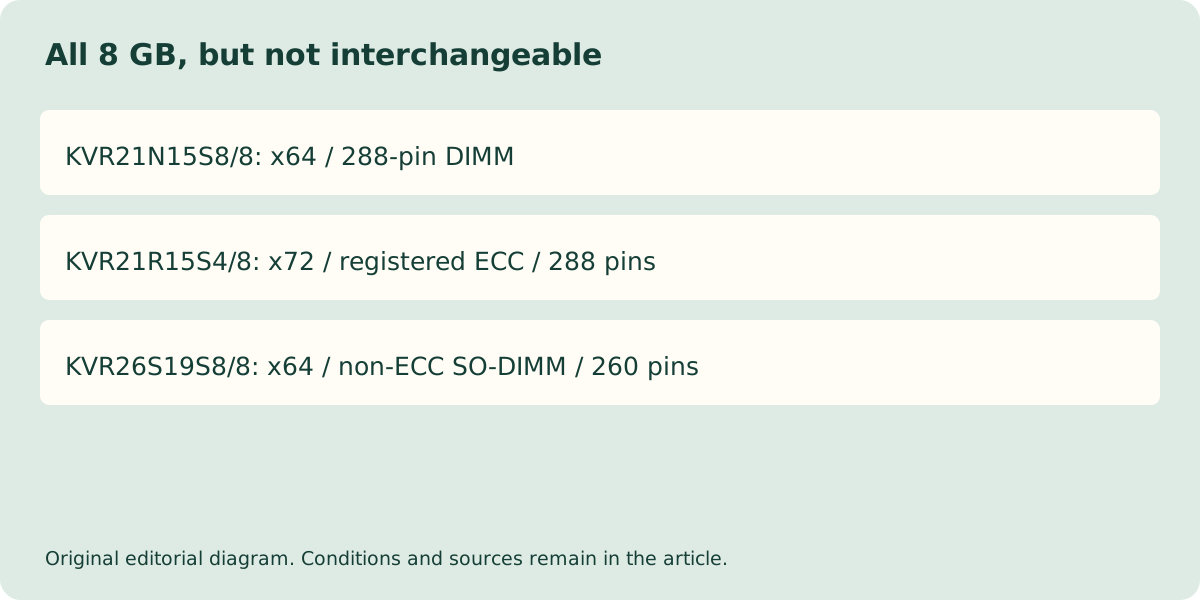
Three actual Kingston DDR4 parts make the distinction concrete: KVR21N15S8/8, KVR21R15S4/8 and KVR26S19S8/8 are all 8 GB modules, but their width organisation, buffering description, pin count and transfer-rate specification differ. These are documented examples, not a claim that the older parts remain in stock or are the best current purchase.
Compare the complete identities in the datasheets
KVR21N15S8/8 is specified as an 8 GB 1Rx8 x64 DDR4-2133 CL15 288-pin DIMM. The registered KVR21R15S4/8 is an 8 GB 1Rx4 x72 DDR4-2133 CL15 288-pin module, explicitly described as registered with parity and ECC. The shared capacity, rate, CAS label, nominal 1.2 V and 288 pins do not make those two modules interchangeable.
KVR26S19S8/8 is instead an 8 GB 1Rx8 x64 DDR4-2666 CL19 260-pin SO-DIMM, explicitly described as non-ECC. It represents the smaller physical format. The digits and suffixes in these part numbers are evidence to preserve, not details to omit when asking a seller whether memory is compatible.
| Exact Kingston part | Capacity / organisation | Documented form | Rate / CAS |
|---|---|---|---|
| KVR21N15S8/8 | 8 GB / 1Rx8 / x64 | 288-pin DIMM | 2133 MT/s / CL15 |
| KVR21R15S4/8 | 8 GB / 1Rx4 / x72 | 288-pin registered ECC DIMM | 2133 MT/s / CL15 |
| KVR26S19S8/8 | 8 GB / 1Rx8 / x64 | 260-pin non-ECC SO-DIMM | 2666 MT/s / CL19 |
ECC and registered are not one universal label
The registered example explicitly combines ECC and a register. That does not mean every ECC module is registered, or that a processor mentioning ECC approves this RDIMM. The motherboard and complete system must support the actual buffering and error-correction arrangement. A workstation-looking case is not sufficient evidence of that support.
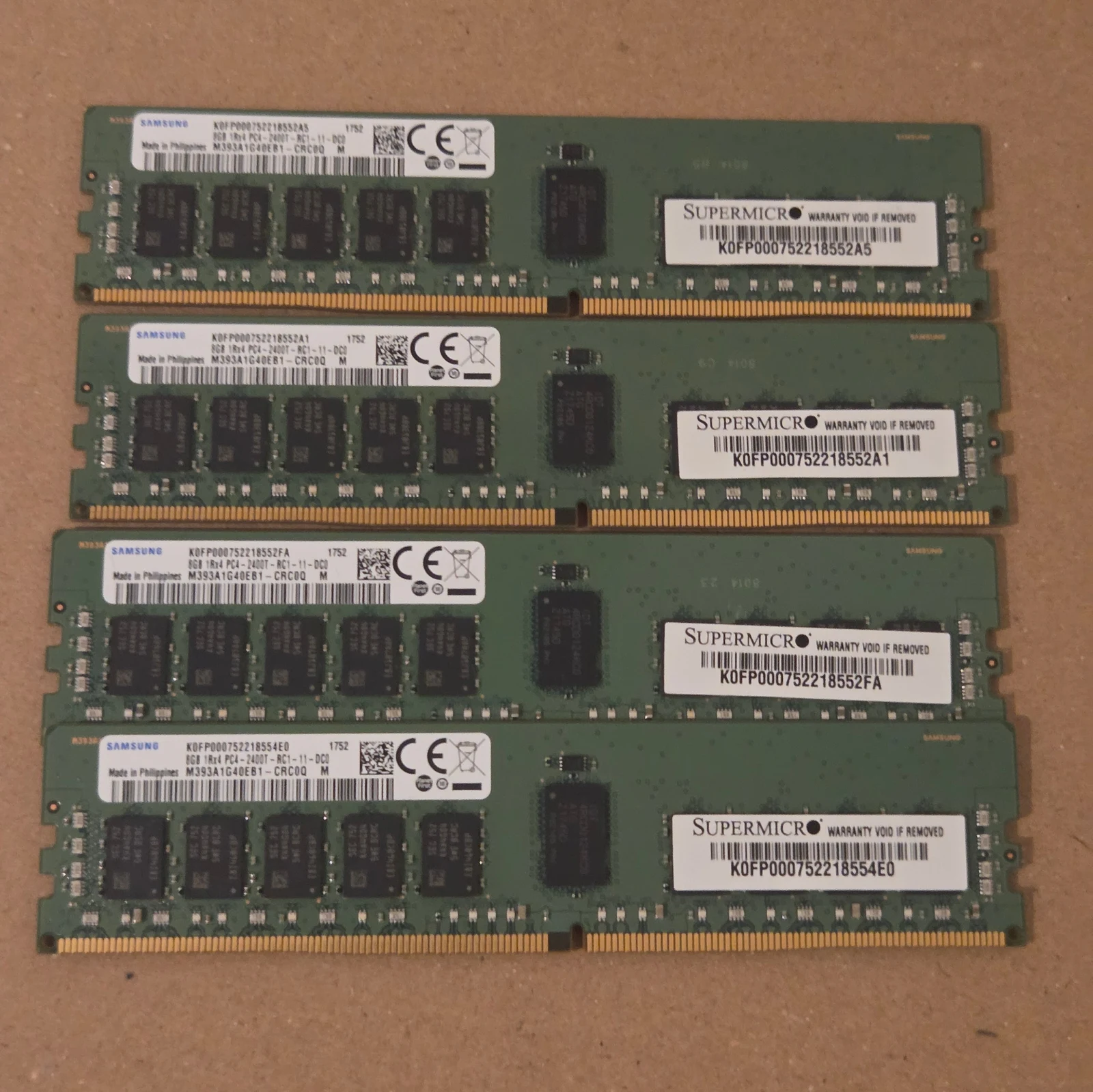
MSI B550-A PRO, for example, specifies unbuffered memory and describes ECC UDIMM support in non-ECC mode. That is not an RDIMM approval or a promise that errors are corrected by the complete system. Read the exact wording rather than reducing it to supports ECC. The photographed Samsung registered module illustrates the RDIMM class distinction; it is not one of the Kingston part numbers in the table.
A photograph helps identify the question, not answer every condition
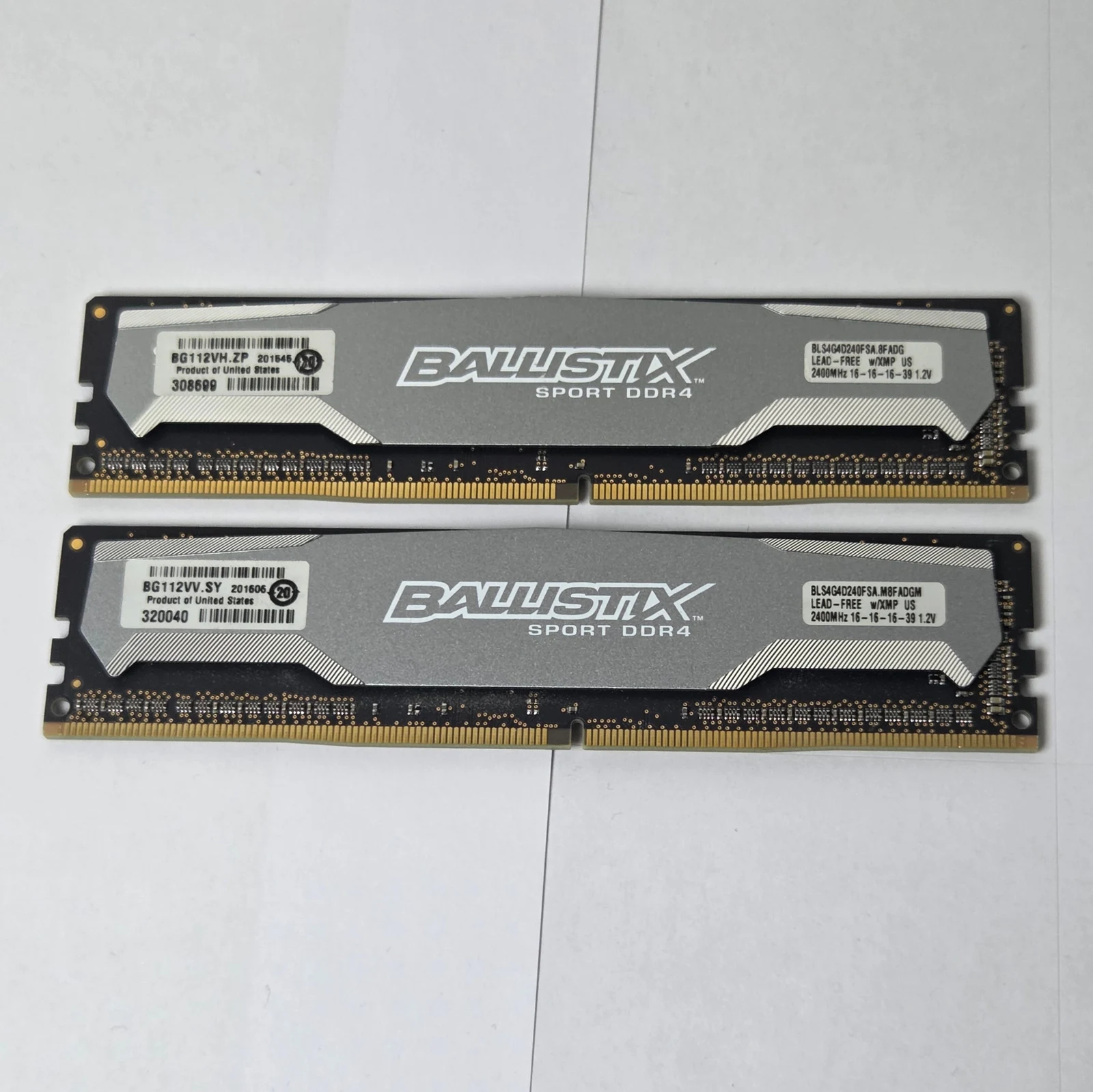
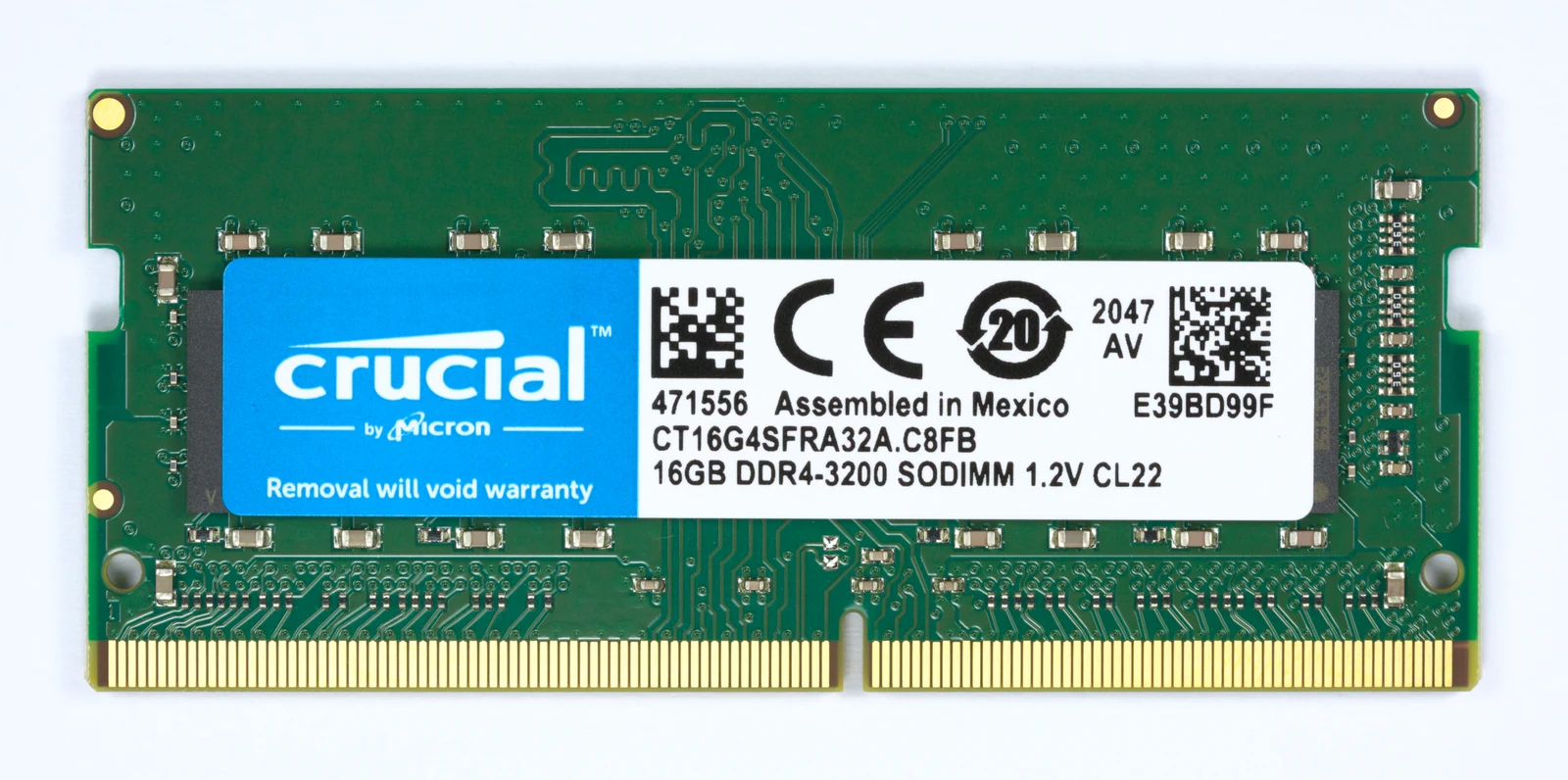
The three independent photographs show actual DDR4 UDIMM, RDIMM and SO-DIMM examples from Crucial, Samsung and Micron/Crucial. Their different module classes directly illustrate the identification task. They are not the exact Kingston parts in the specification table, and appearance does not establish that a particular system supports their capacity, register arrangement or error correction. The shorter SO-DIMM also cannot establish that a mini PC has a replaceable socket.
Obtain the full part identity from the module’s label or the original order record, then compare it with the system service documentation. Do not rely on a seller’s generic server RAM description or infer rank organisation from whether chips appear on one or two faces. Datasheet organisation and supported system configuration are the useful records.
Resolve the exact replacement before paying
For an OEM desktop, retain its model and service identifier, the installed memory part number, supported generation, buffering type, capacity arrangement and any system-specific limit. If the computer is a workstation or server, do not replace a registered requirement with a consumer kit merely because both advertisements say DDR4. Conversely, a mainstream unbuffered board must not be offered an RDIMM as a universal upgrade.
Ask the UK supplier to confirm the exact delivered part and the applicable return conditions if the documented configuration does not match. This guide has no live price or stock feed. Its conclusion is specific: these three real 8 GB modules are different products for different supported arrangements, so the full memory class must agree before capacity or speed can meaningfully be compared.