Graphics-card power: compare exact MSI requirements and PSU cable families
Compare one 8-pin and one 16-pin MSI card, preserve the manufacturer’s ambiguous power row, and keep PSU cable approval separate from wattage.
Updated:
The exact card and exact PSU cable mapping must both agree
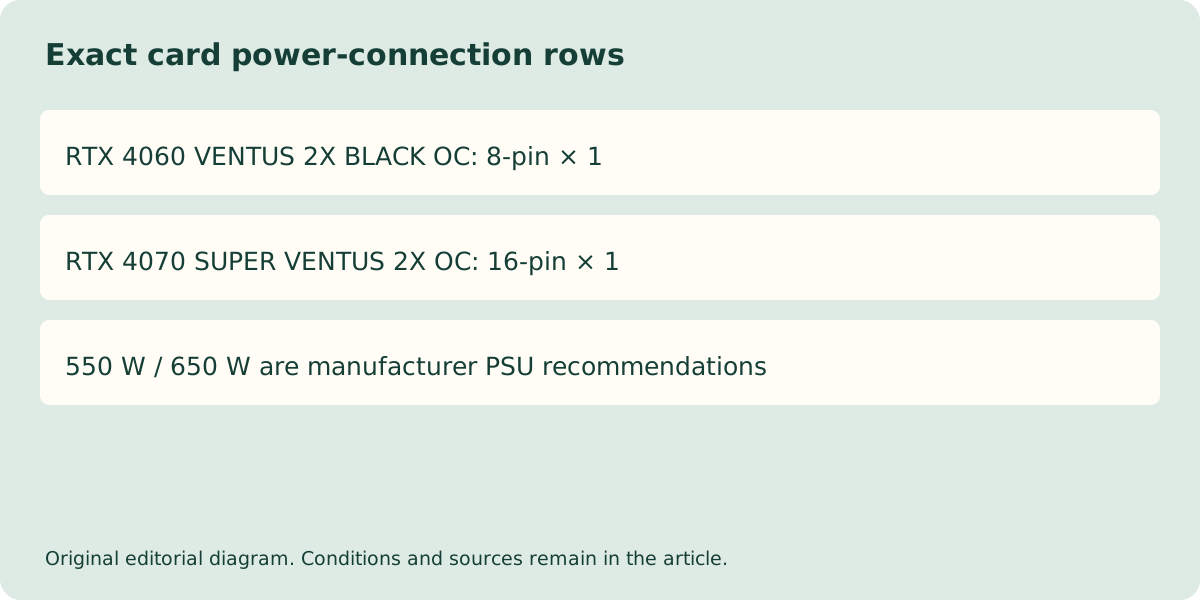
MSI’s RTX 4060 VENTUS 2X BLACK 8G OC lists one 8-pin power connector, while its RTX 4070 SUPER 12G VENTUS 2X OC lists one 16-pin connector. Those are different documented requirements. A PSU wattage label, a cable that looks similar or the number of available plugs does not independently establish that the complete connection is approved.
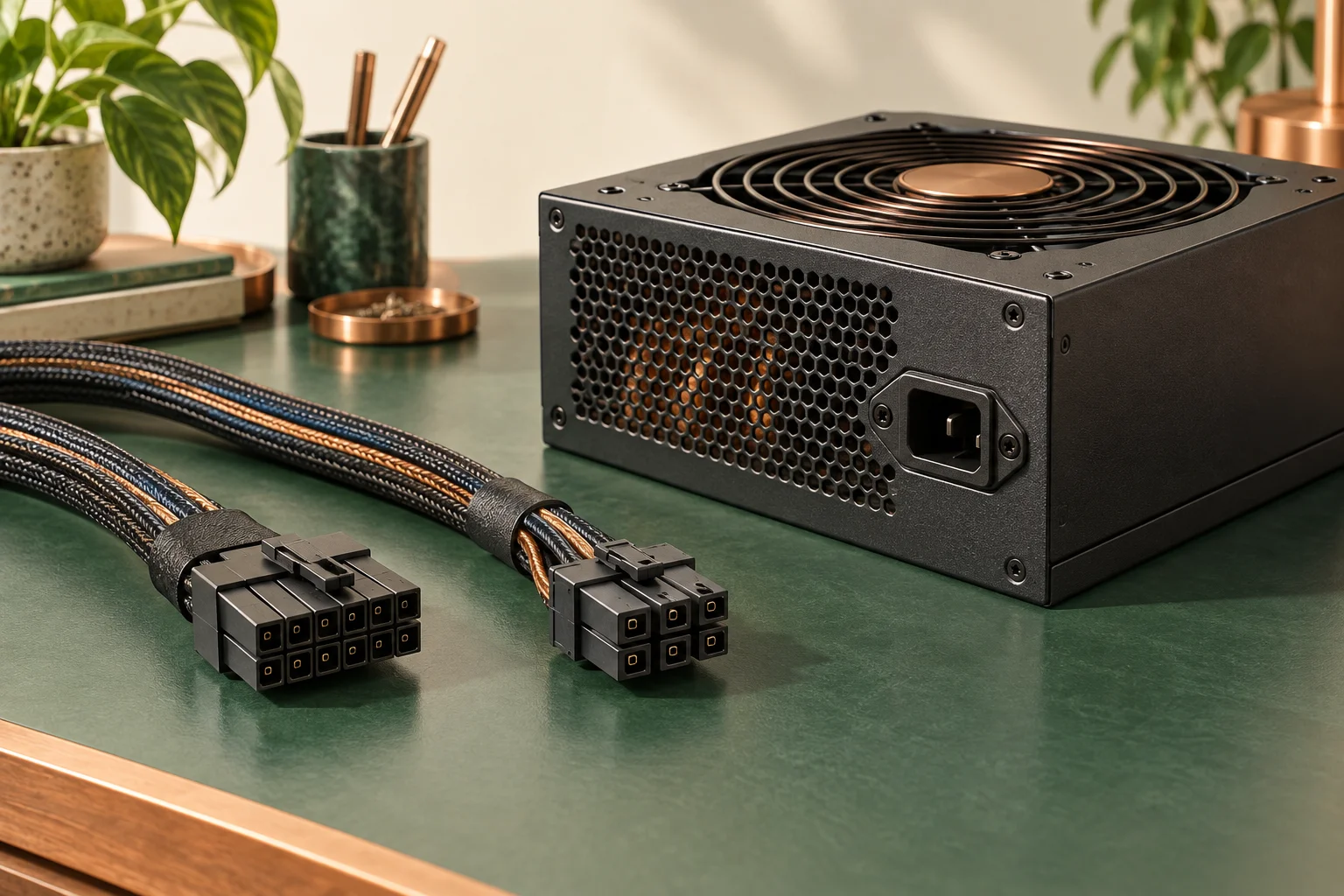
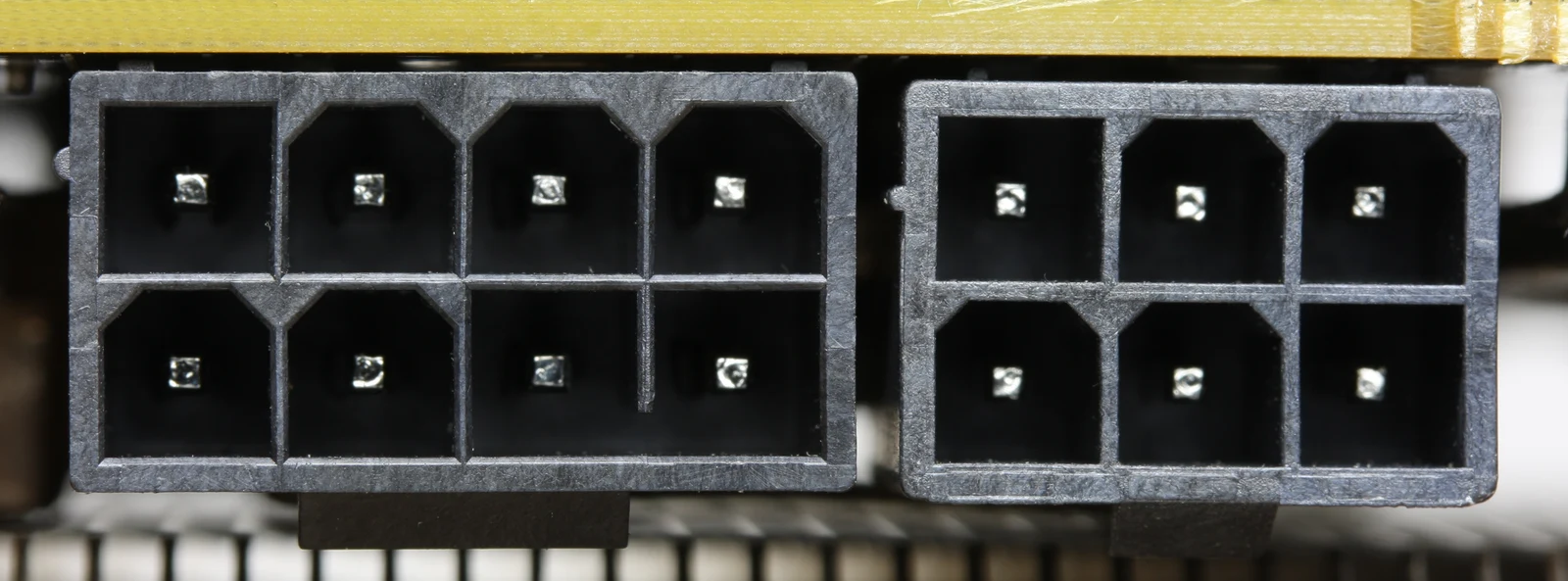
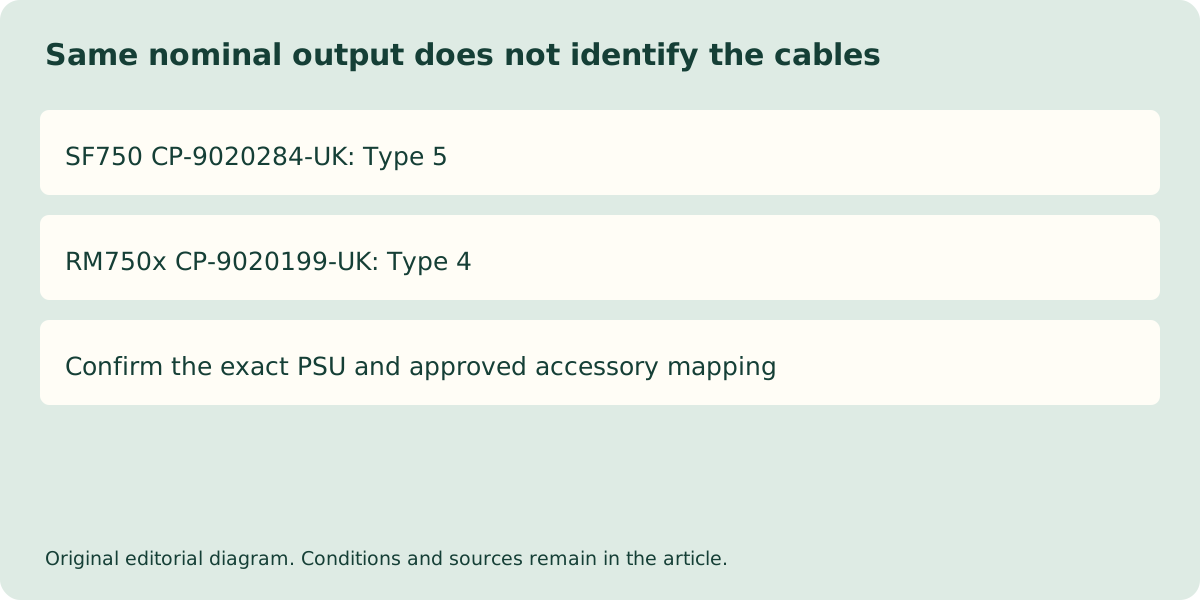
Keep the graphics-card model, PSU SKU and manufacturer-approved cable identity together. Corsair current SF750 CP-9020284-UK specifies Type 5 cables, while the cited RM750x CP-9020199-UK specifies Type 4. Sharing a manufacturer and 750 W nominal output does not make the modular cables interchangeable. The actual six/eight-position connector photograph illustrates GPU-facing physical plugs, not either Corsair PSU-side cable mapping.
Read the complete MSI rows, including the unresolved wording
The RTX 4060 page lists recommended PSU 550 W and its power-consumption field currently reads 115 W or 120 W. We preserve that exact ambiguity rather than choosing one value and presenting it as measured consumption. The RTX 4070 SUPER page lists 220 W and recommended PSU 650 W. These are manufacturer specification and recommendation fields, not wall-power measurements made here.
The recommendation belongs with a complete system configuration and the manufacturer’s conditions. A PSU above the numerical recommendation is not automatically approved: connector availability, cable mapping, operating condition and the remaining components still matter. Conversely, the card power row should not be used as the entire desktop’s consumption.
| Exact MSI model | Power connector row | Power-consumption row | Recommended PSU row |
|---|---|---|---|
| RTX 4060 VENTUS 2X BLACK 8G OC | 8-pin × 1 | 115 W or 120 W, source wording | 550 W |
| RTX 4070 SUPER 12G VENTUS 2X OC | 16-pin × 1 | 220 W | 650 W |
A pin count is not a complete cable identity
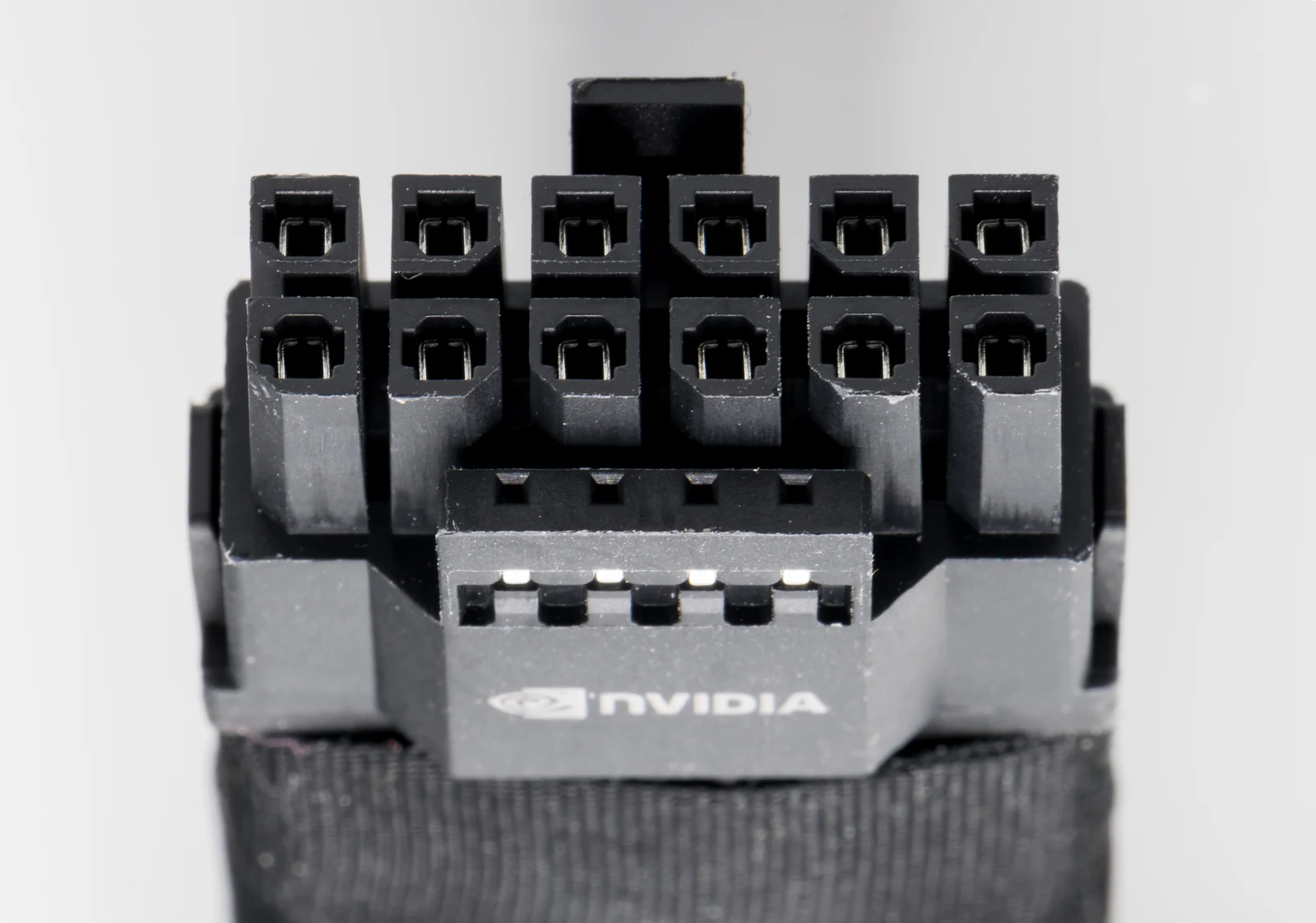
An eight-position connector description does not make CPU/EPS and graphics-card PCIe cables equivalent. A 16-pin description also does not by itself identify every applicable cable revision or prove that any adapter is approved. Use the exact GPU and PSU documentation and a manufacturer-confirmed accessory SKU where an accessory is proposed.
The photographed six/eight-position pair and separate NVIDIA connector expose actual faces, not complete cable identities. They do not establish a cable revision or Corsair PSU-side mapping. Corsair cable-compatibility information remains model and cable-family guidance, not permission to mix an unverified lead because it fits. We provide no pinout, rewiring method or PSU-opening procedure. If the mapping cannot be established, the configuration stays unresolved.
Allow for the connection in the mechanical plan
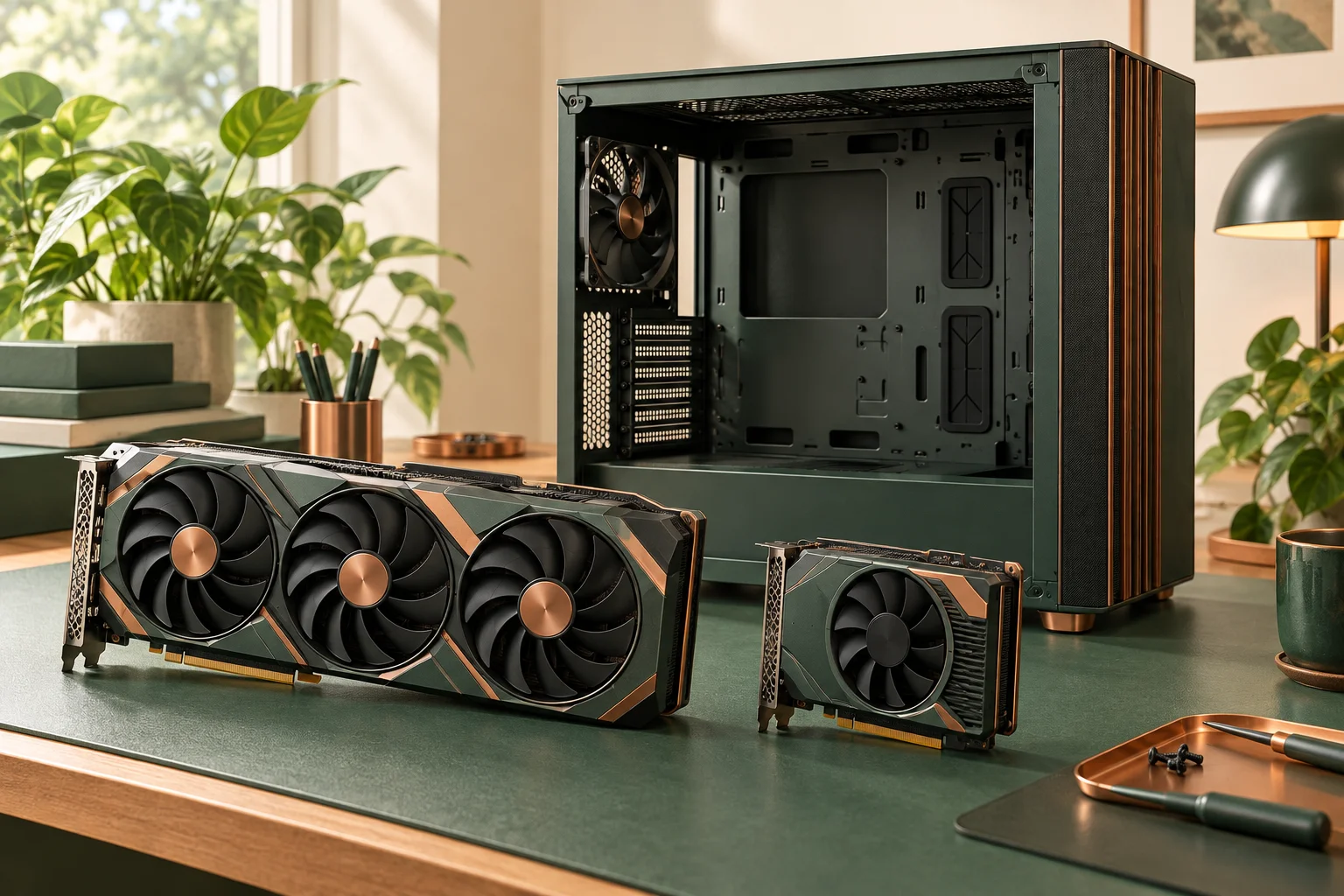
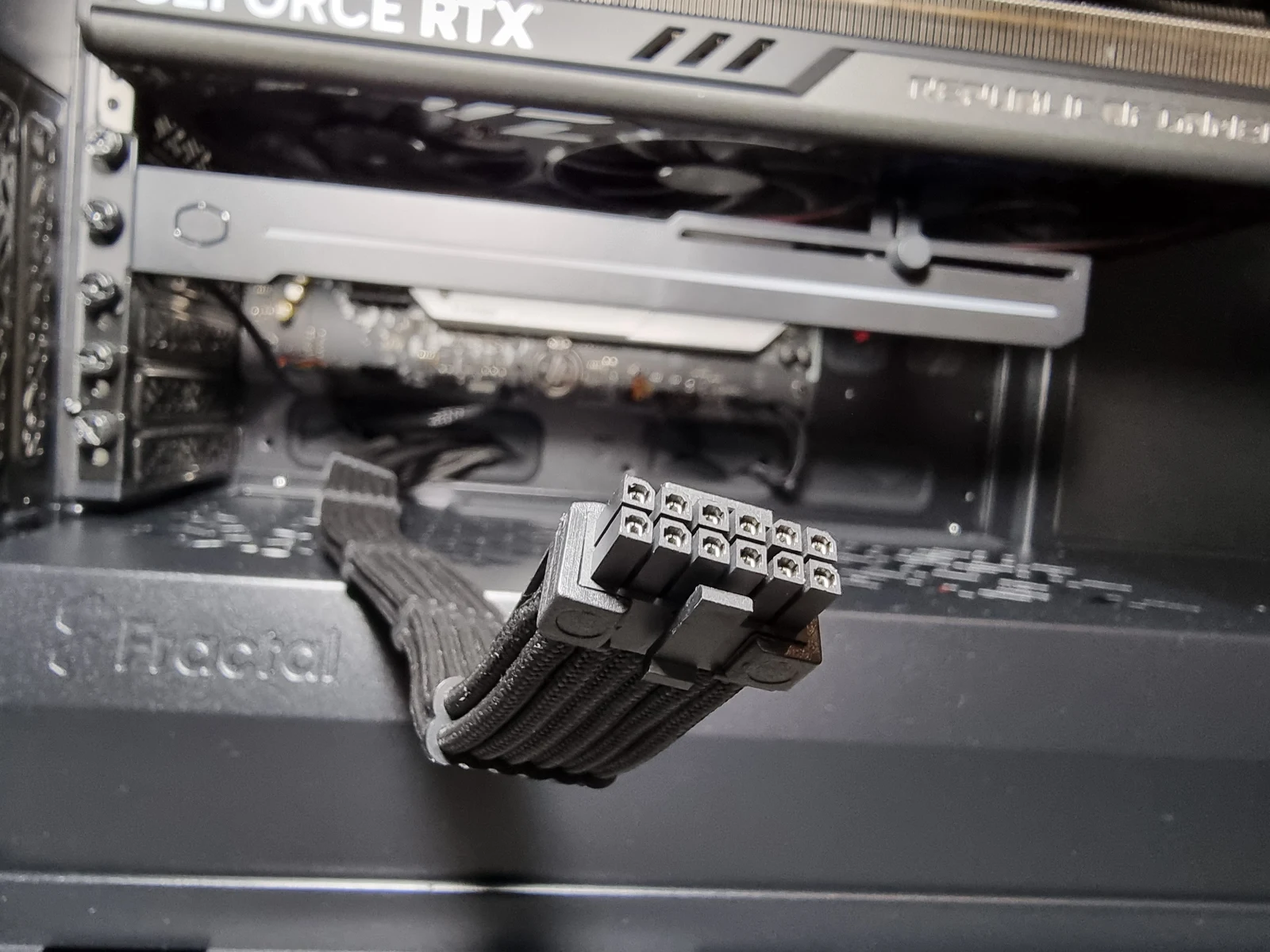
Power compatibility and physical clearance are separate. The card’s body dimensions can omit space needed by its connected cable, and a compact case can restrict the permitted route. Do not invent a universal bend allowance. Obtain the card, cable and case requirements for the actual arrangement before confirming the order.
The actual aftermarket cable photograph shows a loose connector in front of a different installed card and other nearby hardware. Its physical appearance does not establish approval, provenance, seating or a permitted bend radius for the proposed configuration. A full documented power path includes electrical approval and the permitted mechanical envelope; a positive length remainder does not settle either by itself.
Ask for a complete, traceable UK configuration
For a prebuilt or parts order, ask the supplier to identify the exact graphics card, PSU model, included or approved cable and any required accessory. Retain the manufacturer confirmation if a different cable is proposed. If the PSU is reused, its precise identity and original cable set remain essential; a loose cable with a familiar plug is not evidence of origin.
No current prices, stock or hands-on power measurements are published here. The useful comparison is source-specific: one named card requires an 8-pin connection and the other a 16-pin connection, their recommendation rows differ, and the cited Type 4 and Type 5 PSU families must not be collapsed into one interchangeable cable system.