ATX, micro-ATX or Mini-ITX: compare named board layouts
Three documented MSI B550 boards show what physical size changes, what it does not, and why slots and the case must be checked together.
Updated:
Pick the layout that accommodates your actual expansion plan
Choose ATX when the documented additional slots and space solve a real requirement, micro-ATX when its exact layout is sufficient, and Mini-ITX when a compact case justifies its tighter expansion limits. Size is not a quality or performance ranking. The MSI B550-A PRO, B550M PRO-VDH WIFI and MPG B550I GAMING EDGE WIFI make a useful comparison because all three are documented AM4 B550 boards, while their dimensions and slot arrangements differ.
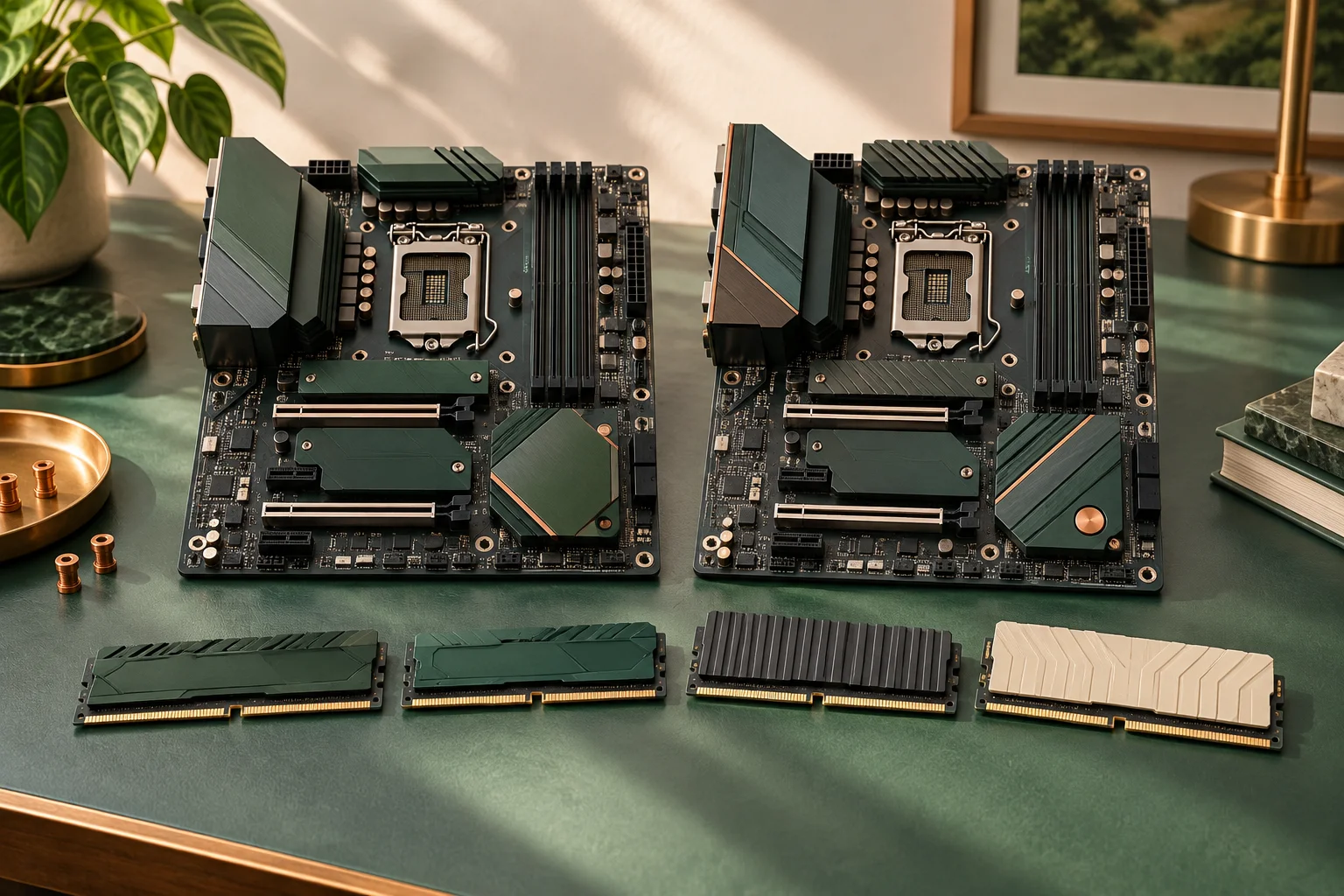
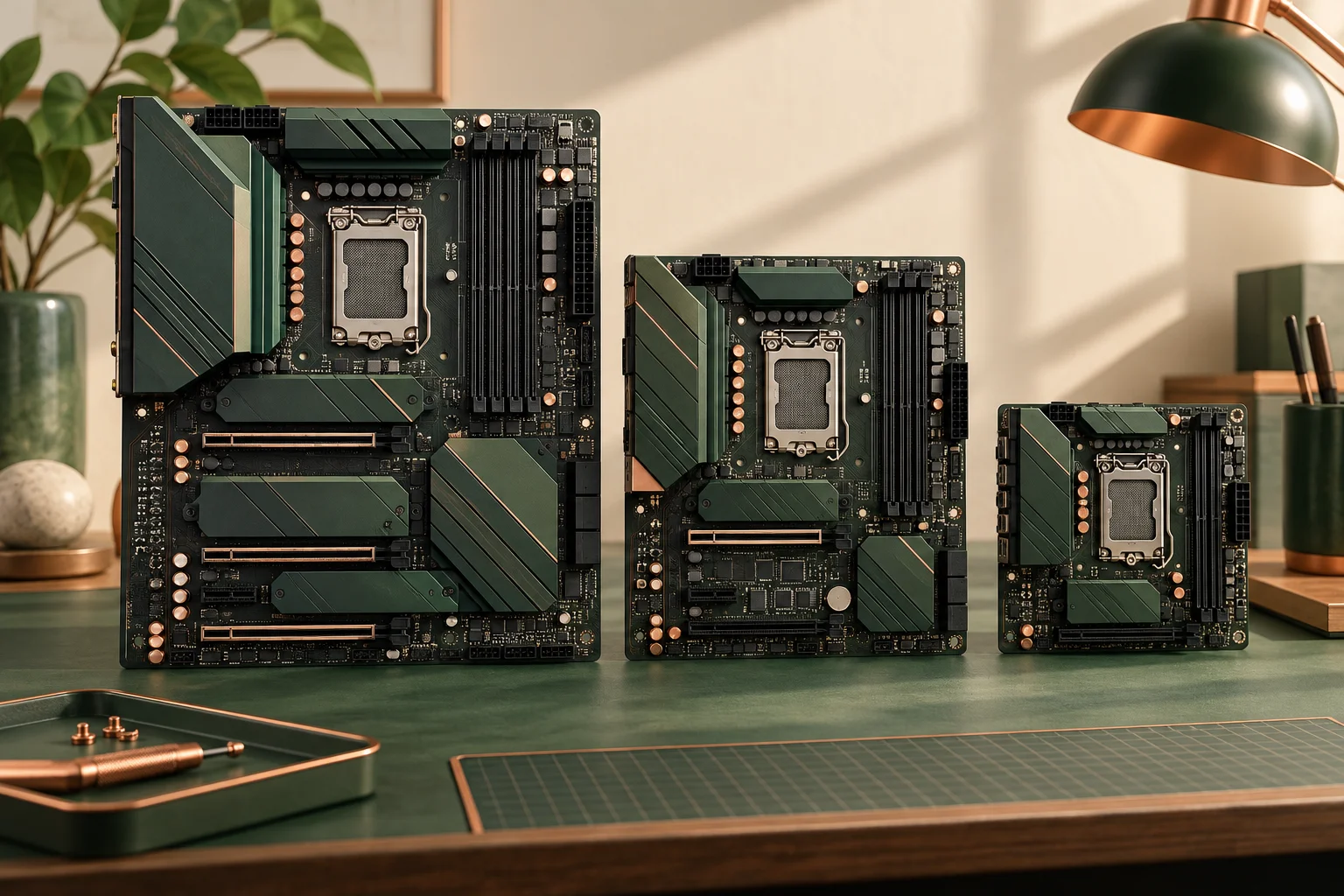
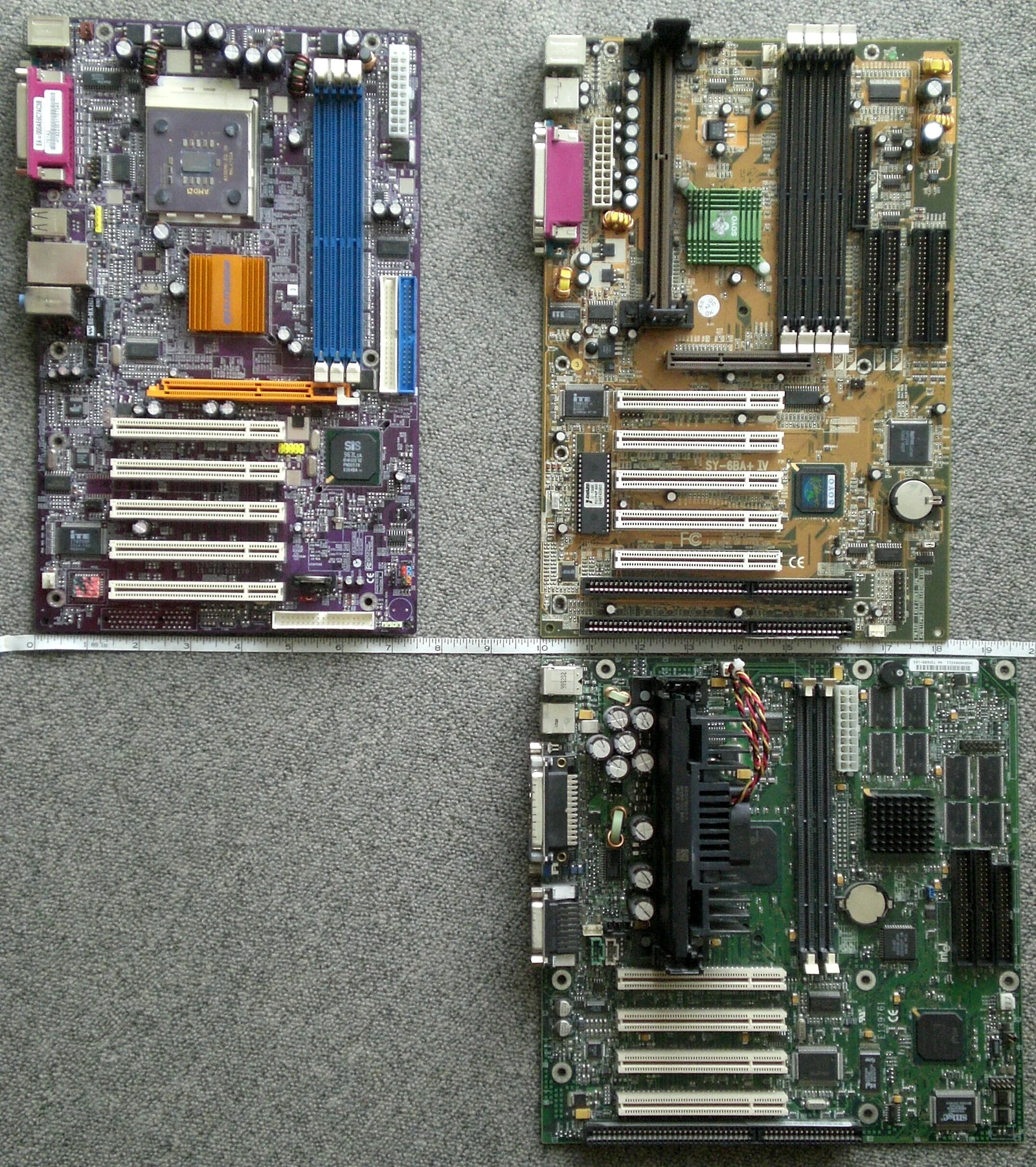
A case must explicitly support the chosen form factor and mounting arrangement. The historical group photograph shows two differently sized ATX boards and a smaller micro-ATX board beside a ruler, illustrating why the label alone is not an exact envelope. It counts as one photograph. These are different physical boards from the other two archival photographs; none is a named MSI comparison model. The specific enclosure manual remains part of the purchasing decision.
Compare these three boards rather than a universal size chart
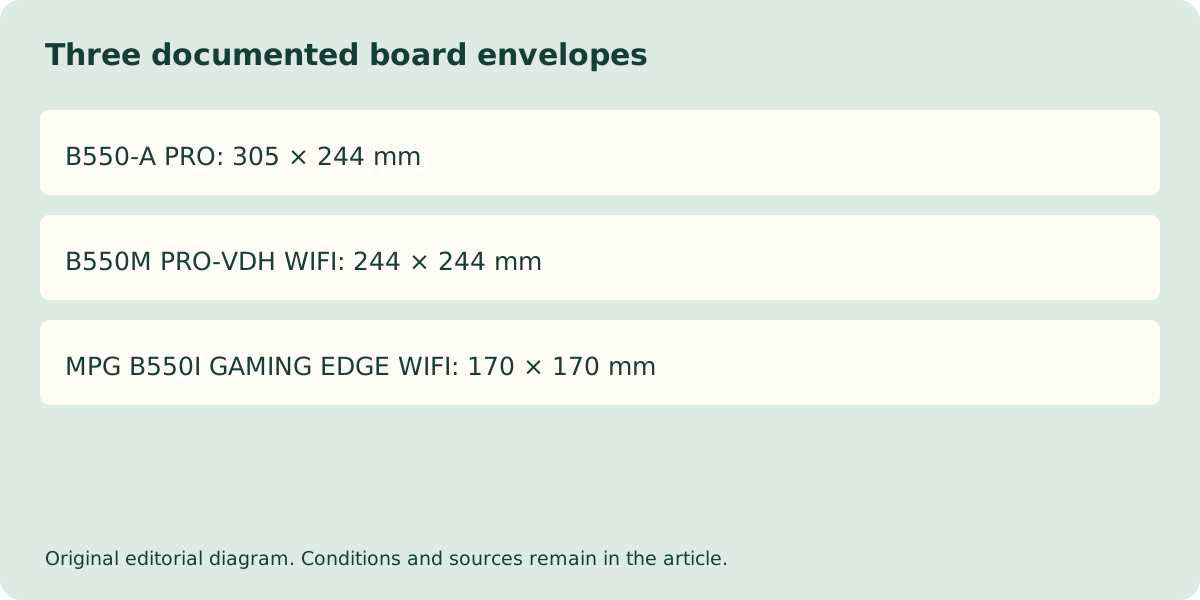
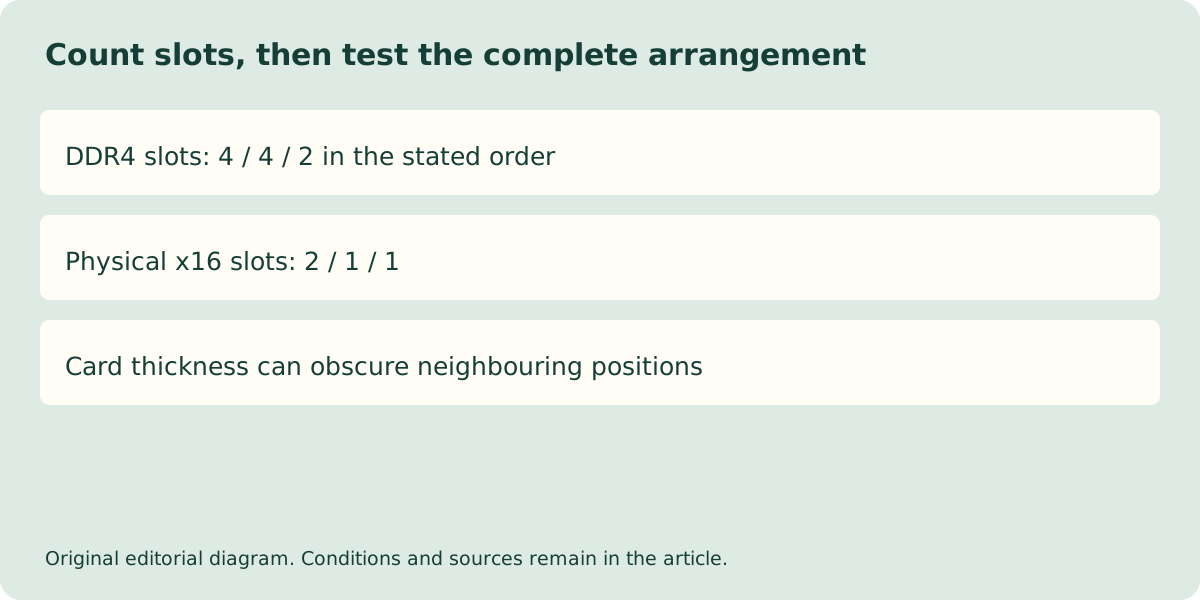
MSI lists the B550-A PRO at 305 × 244 mm, the B550M PRO-VDH WIFI at 244 × 244 mm, and the MPG B550I GAMING EDGE WIFI at 170 × 170 mm. Those are actual model dimensions. The larger two specify four DDR4 memory slots; the Mini-ITX model specifies two. This affects how an existing kit occupies the available slots and how a future capacity change might be arranged.
The ATX model lists two physical PCIe x16 slots, while the micro-ATX and Mini-ITX examples list one each. A physical x16 slot does not establish sixteen electrical lanes or the same generation in every position. Read the detailed slot rows, installed processor conditions and shared-resource notes before allocating a graphics card, capture card or other expansion device.
| Exact model | Board dimensions | DDR4 slots | Physical PCIe x16 slots |
|---|---|---|---|
| B550-A PRO | 305 × 244 mm | 4 | 2 |
| B550M PRO-VDH WIFI | 244 × 244 mm | 4 | 1 |
| MPG B550I GAMING EDGE WIFI | 170 × 170 mm | 2 | 1 |
The graphics card can occupy more than its connector
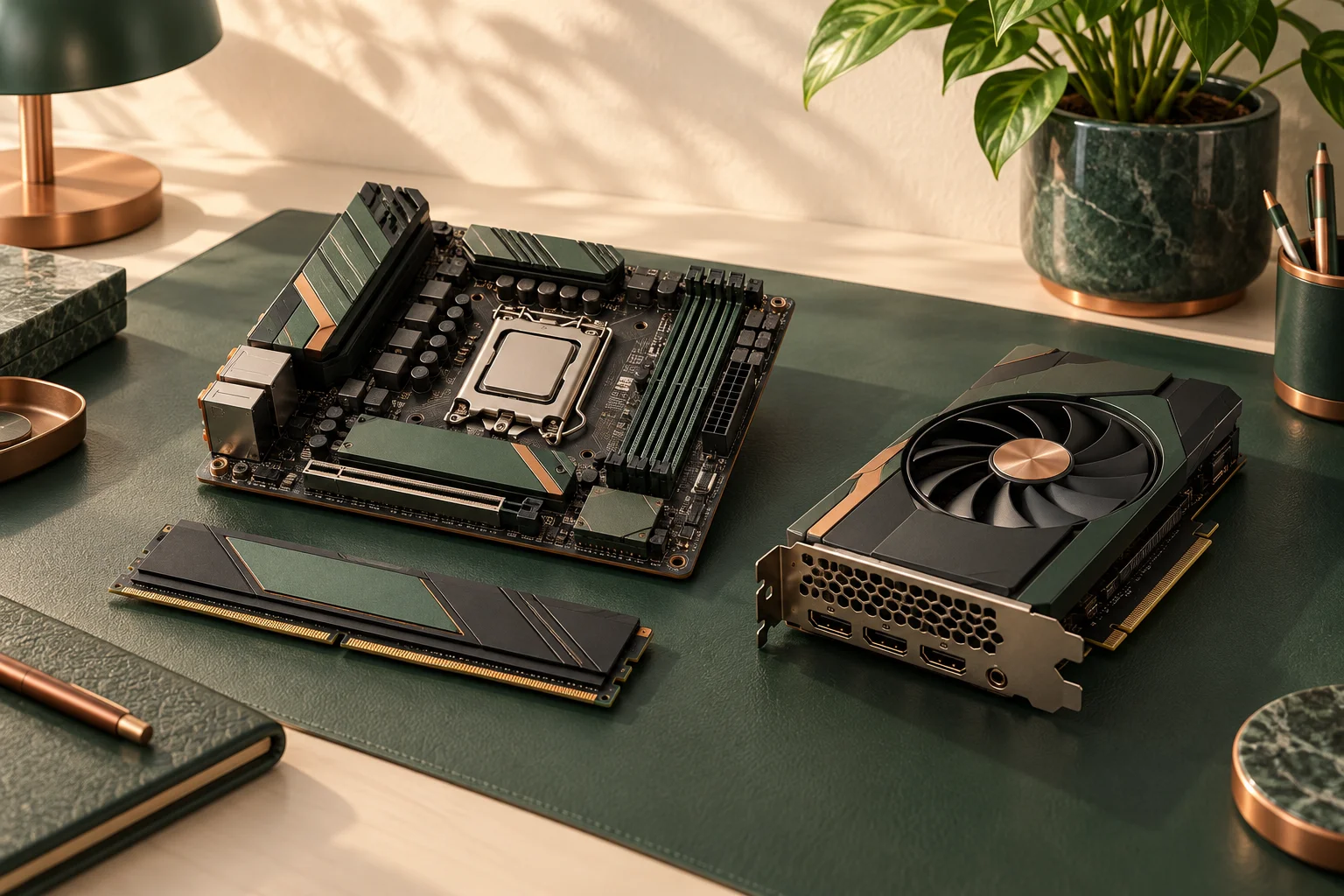
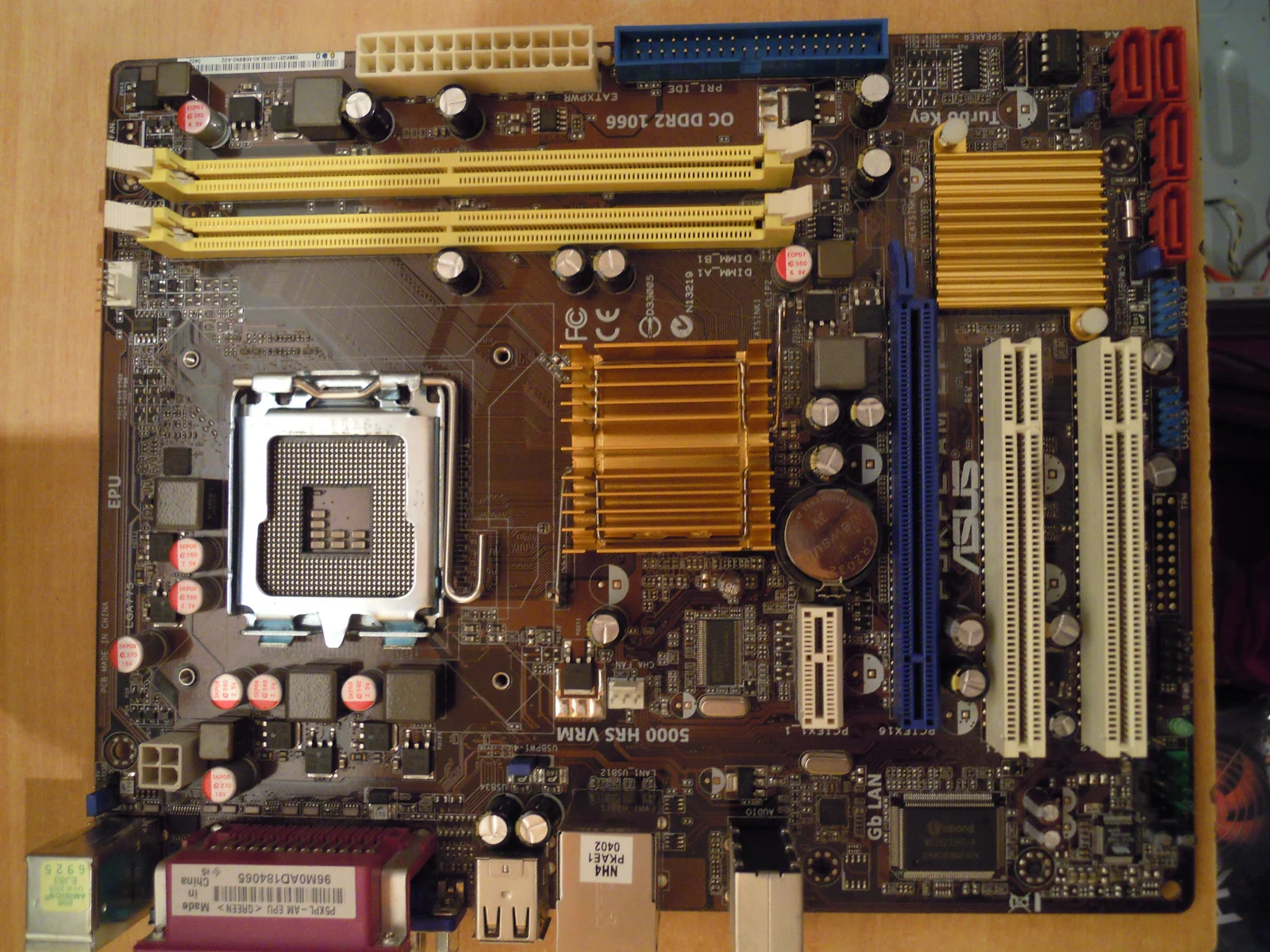
A wide graphics-card cooler can obscure neighbouring expansion positions. Count usable positions after considering the complete card envelope, not just the number of sockets printed in the board specification. The separate historical micro-ATX board photograph shows actual expansion and memory positions, but it does not establish how a current graphics card fits either MSI board. No historical connector, cooling dimension or performance is transferred to a current component.
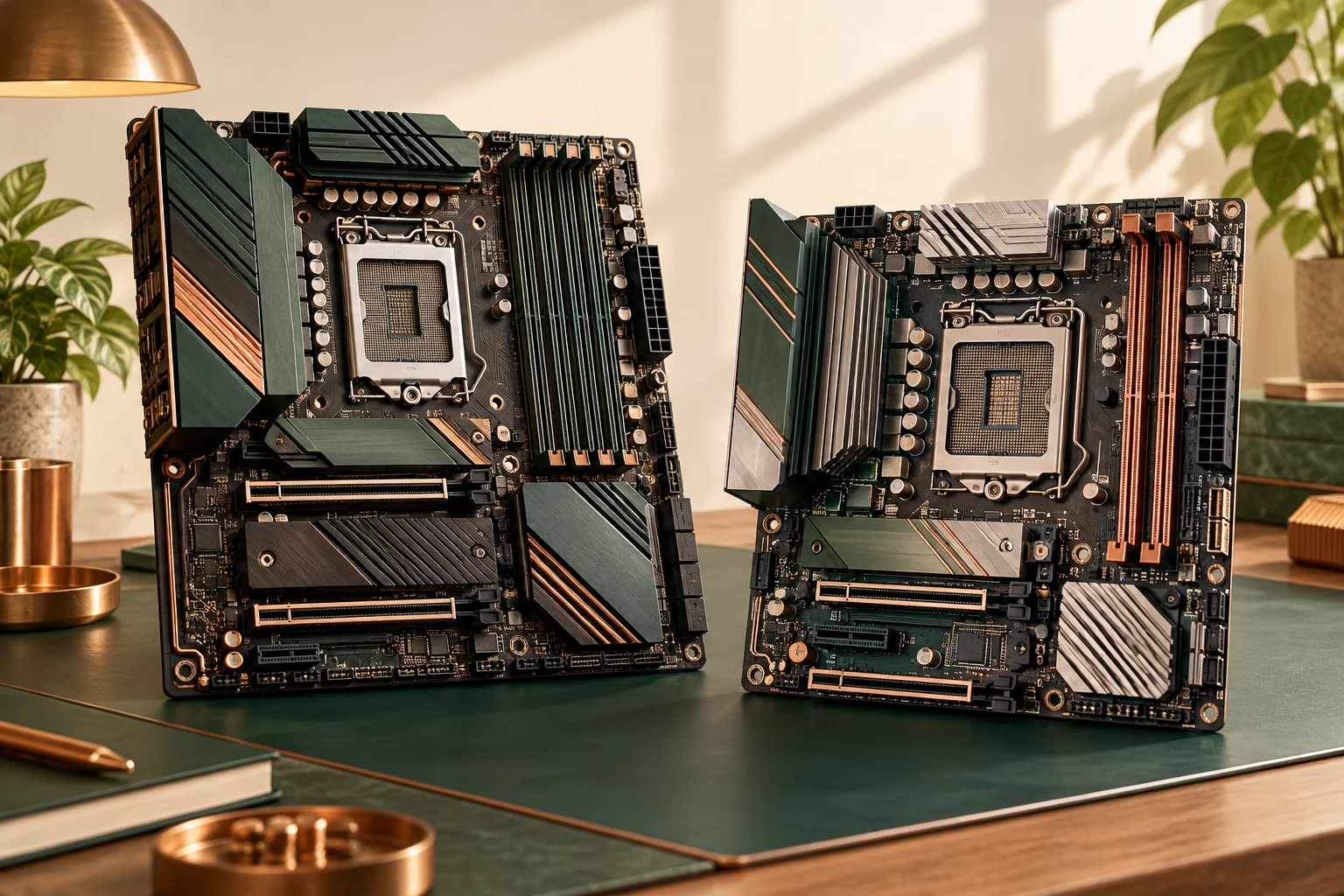
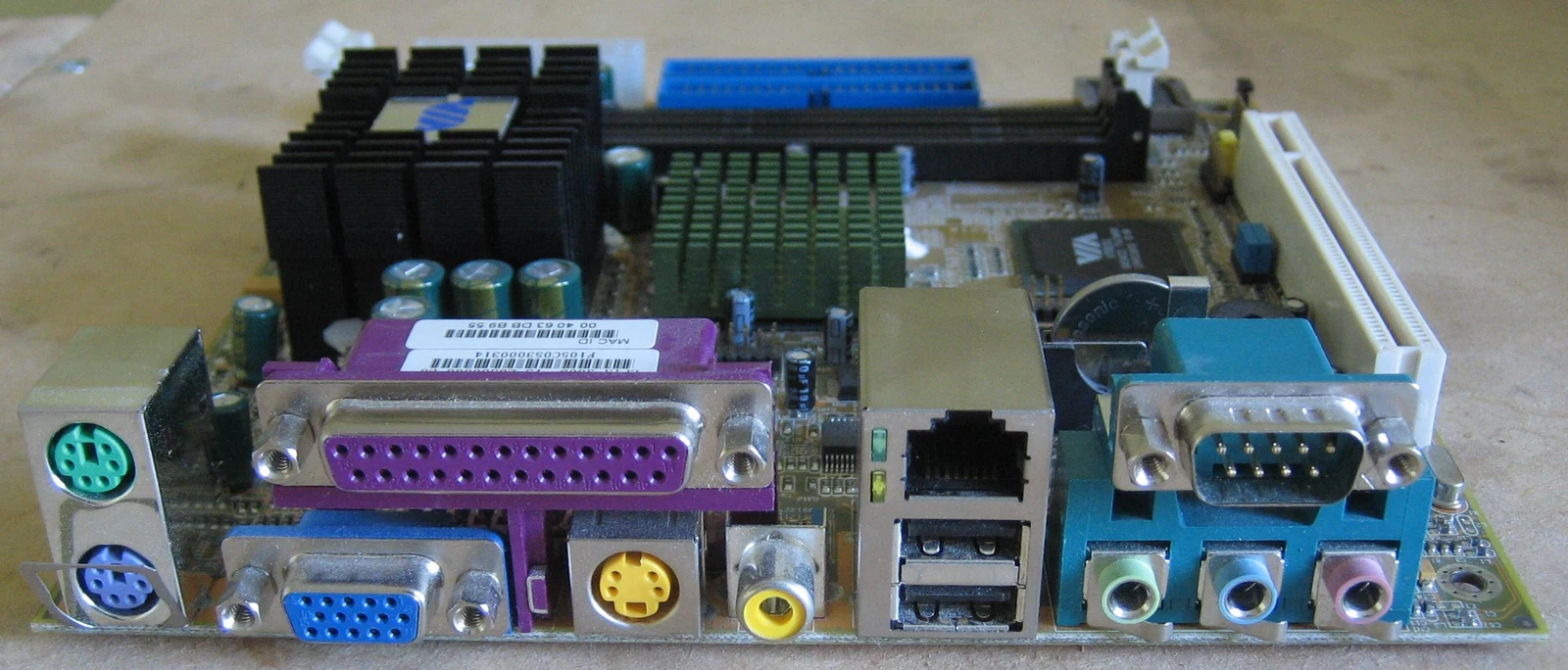
Compactness also changes where cables, storage modules and cooling hardware must coexist. The independent Mini-ITX photograph shows the rear-I/O edge and connector placement; it is not the MSI board in the table. Confirm front-panel header compatibility, the supplied rear-I/O arrangement and the location of any rear-side M.2 socket before selecting the case. Two boards with the same storage count can differ in accessibility and packaging. This comparison does not contain an assembly procedure or permission to modify a chassis.
Keep platform and firmware checks independent
All three examples use AM4, but that does not approve every AM4 processor. The published support wording excludes certain older processors and directs readers to supported-processor information. Match the exact CPU and required firmware revision; do not promise that a second-hand board arrives with that revision already installed.
Memory remains a separate decision from board size. Check the full kit part number and intended populated slots against the relevant support material. Four slots do not promise that any four independently purchased modules will operate together at the same profile. Board size does not remove the processor memory controller or configuration limits.
Turn the comparison into a UK order specification
Write down the exact board, case, processor, memory kit and complete graphics-card model before asking for a quotation. If only one expansion card is required, the ATX board may provide capacity you will never use; if a second card is essential, a compact board can eliminate the intended arrangement. Neither conclusion establishes which system is cheaper or faster.
Ask the UK seller to confirm the supplied revision, included wireless equipment where applicable, VAT and delivery treatment, and the return conditions for an incompatible selection. No current offer or stock assertion is published here. Choose the smallest documented arrangement that meets the whole plan, rather than treating the form-factor label as a substitute for the specification.