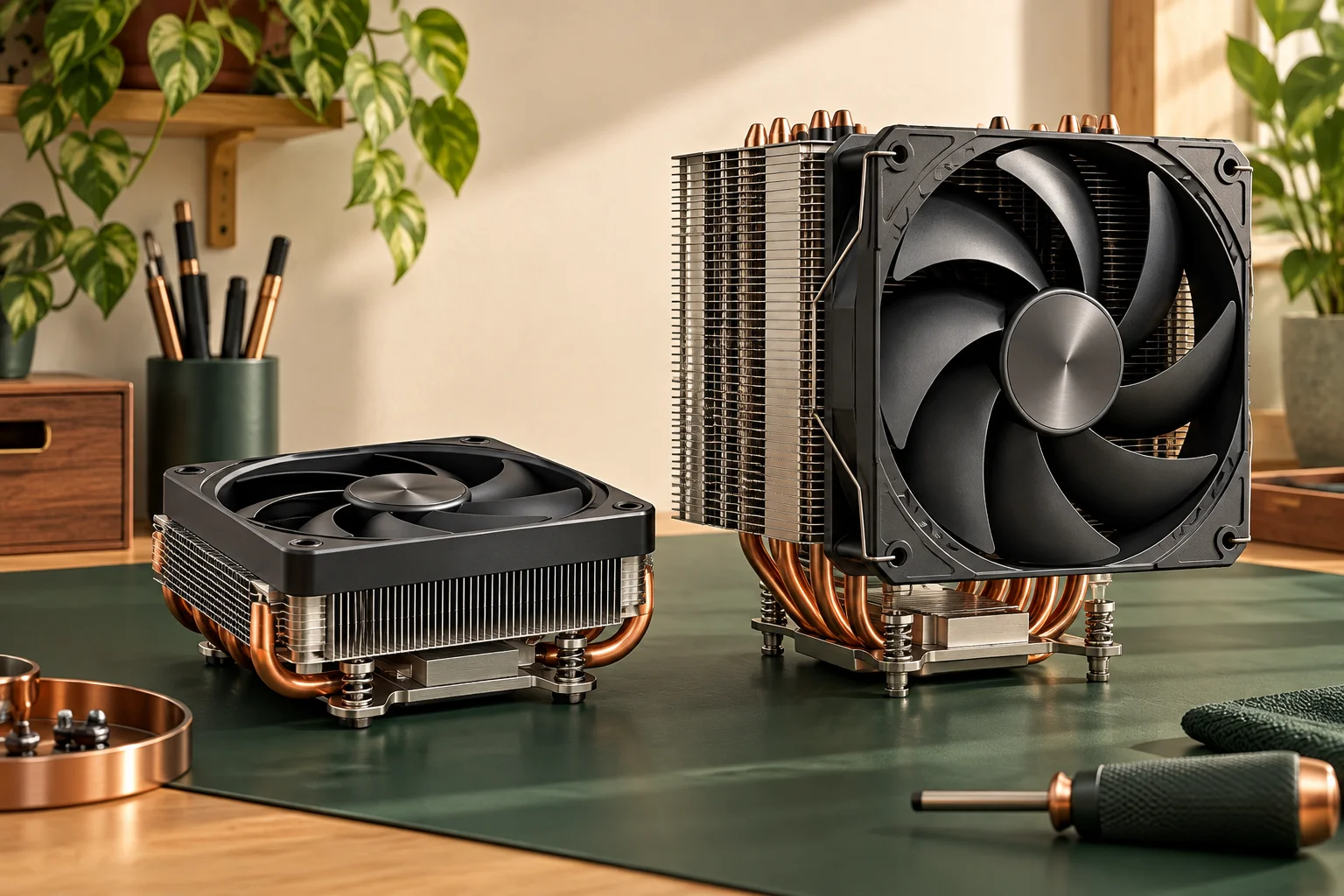
CPU cooler height: compare the documented Terra and Define 7 limits
The checked Fractal case summaries list very different cooler-height limits. Compare the complete cooler arrangement and configured case, not exterior case width.
Updated:
Use the case’s documented cooler limit and the complete cooler height
A cooler-height decision compares the exact case configuration with the entire supported cooler arrangement, including any fan position that changes its height. Do not subtract motherboard thickness from the case’s outside width and call the result clearance. Manufacturer-defined limits and a complete cooler specification are the useful starting points.
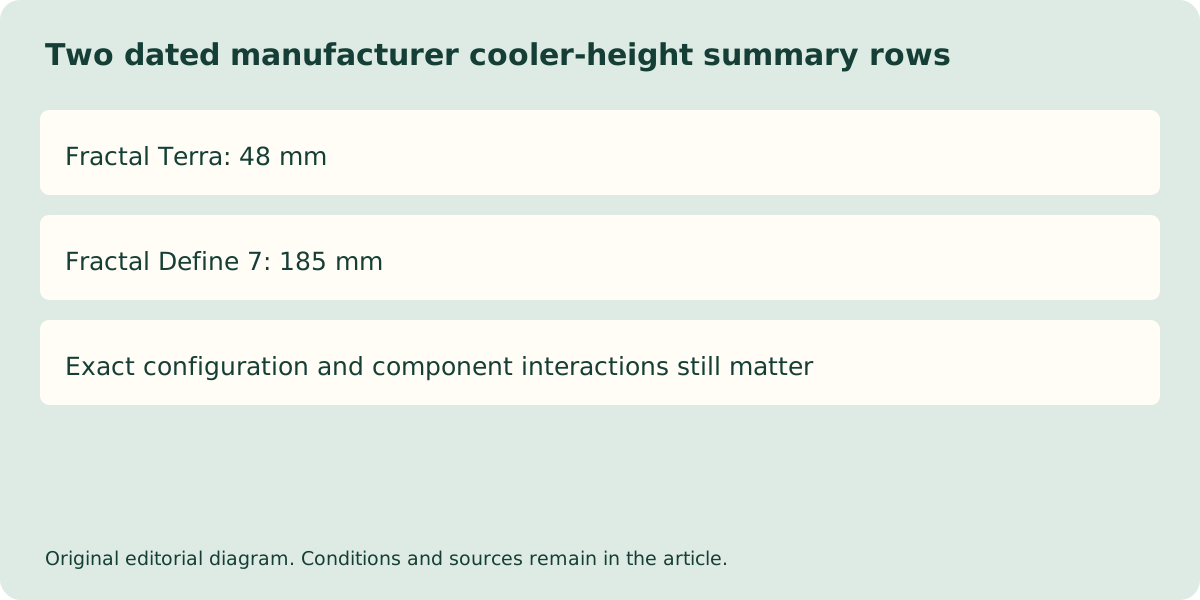
Fractal’s checked Terra and Define 7 product summaries show why the exact model matters: Terra currently lists a 48 mm CPU-cooler height, while Define 7 lists 185 mm. These are dated source-listed summary values, not a universal small-case or tower-case rule, and not approval for every arrangement at every listed maximum.
Compare the actual case conditions before a cooler model
Terra lists Mini-ITX motherboard compatibility and SFX/SFX-L PSU support. Define 7 lists E-ATX, ATX, micro-ATX and Mini-ITX, with ATX PSU support. Those differences describe distinct component-layout plans, not merely two differently sized boxes around the same unrestricted configuration.
The current summaries also list different graphics envelopes: Terra lists up to 322 mm GPU length and 72 mm thickness, while Define 7 lists up to 470 mm GPU length. Such maxima require the detailed case instructions and the actual arrangement of other components. They must not be added together into a claim that every maximum can be used simultaneously.
| Checked Fractal summary | Terra | Define 7 |
|---|---|---|
| CPU-cooler height row | 48 mm | 185 mm |
| Motherboard compatibility row | Mini-ITX | E-ATX / ATX / micro-ATX / Mini-ITX |
| PSU format row | SFX / SFX-L | ATX |
| PSU maximum length row | 130 mm | 250 mm |
| GPU maximum length row | 322 mm | 470 mm |
A raised fan can change the complete cooling envelope
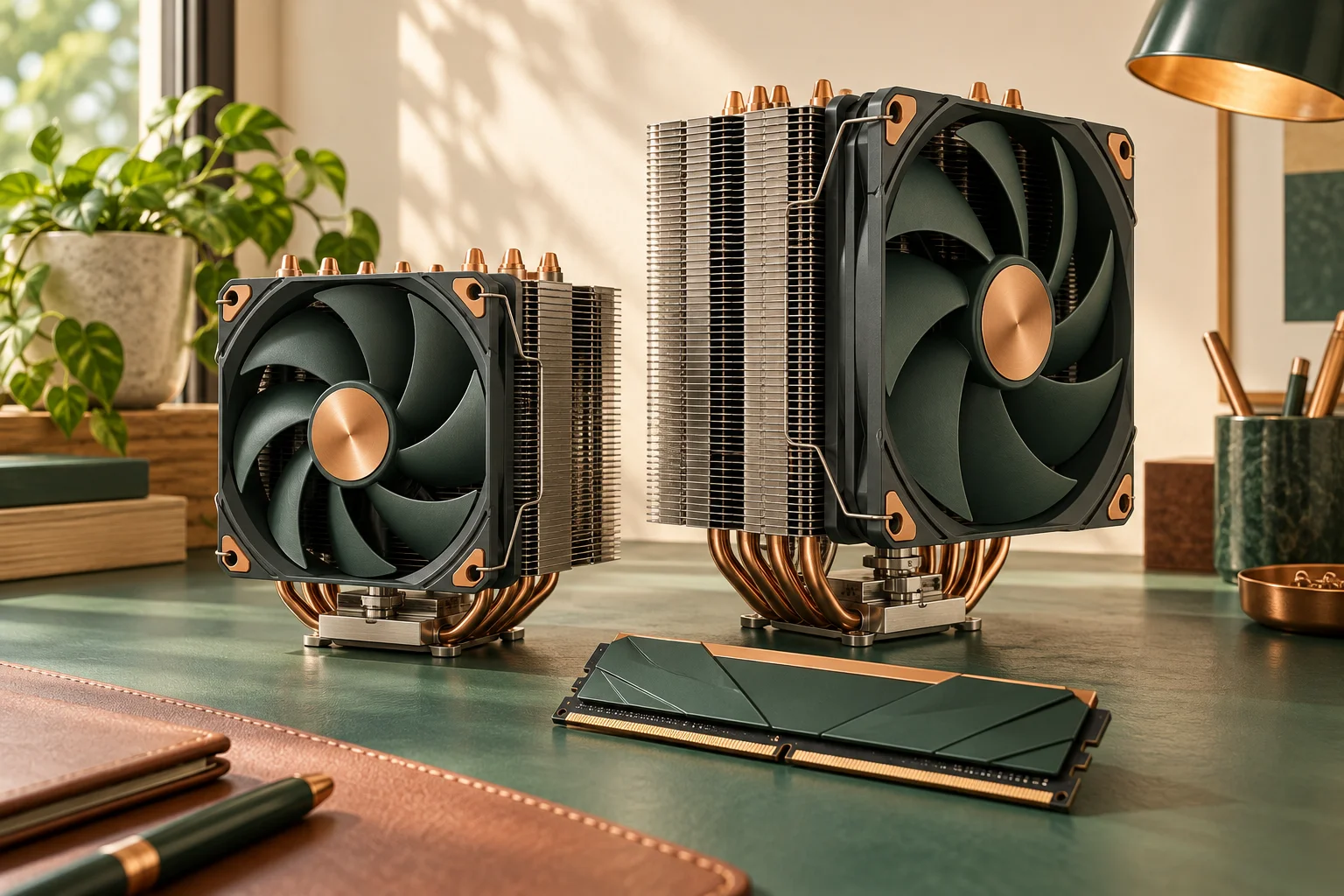
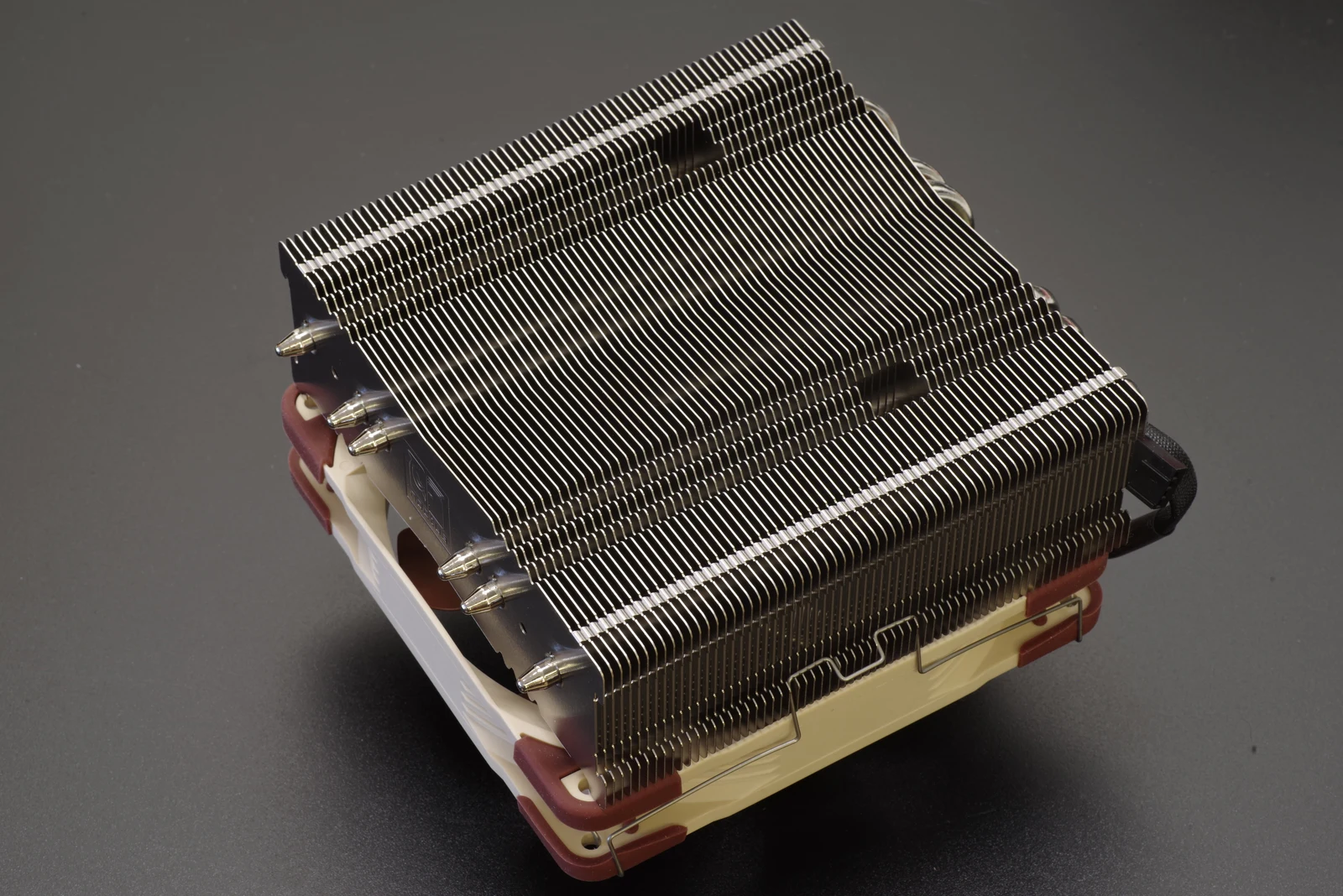
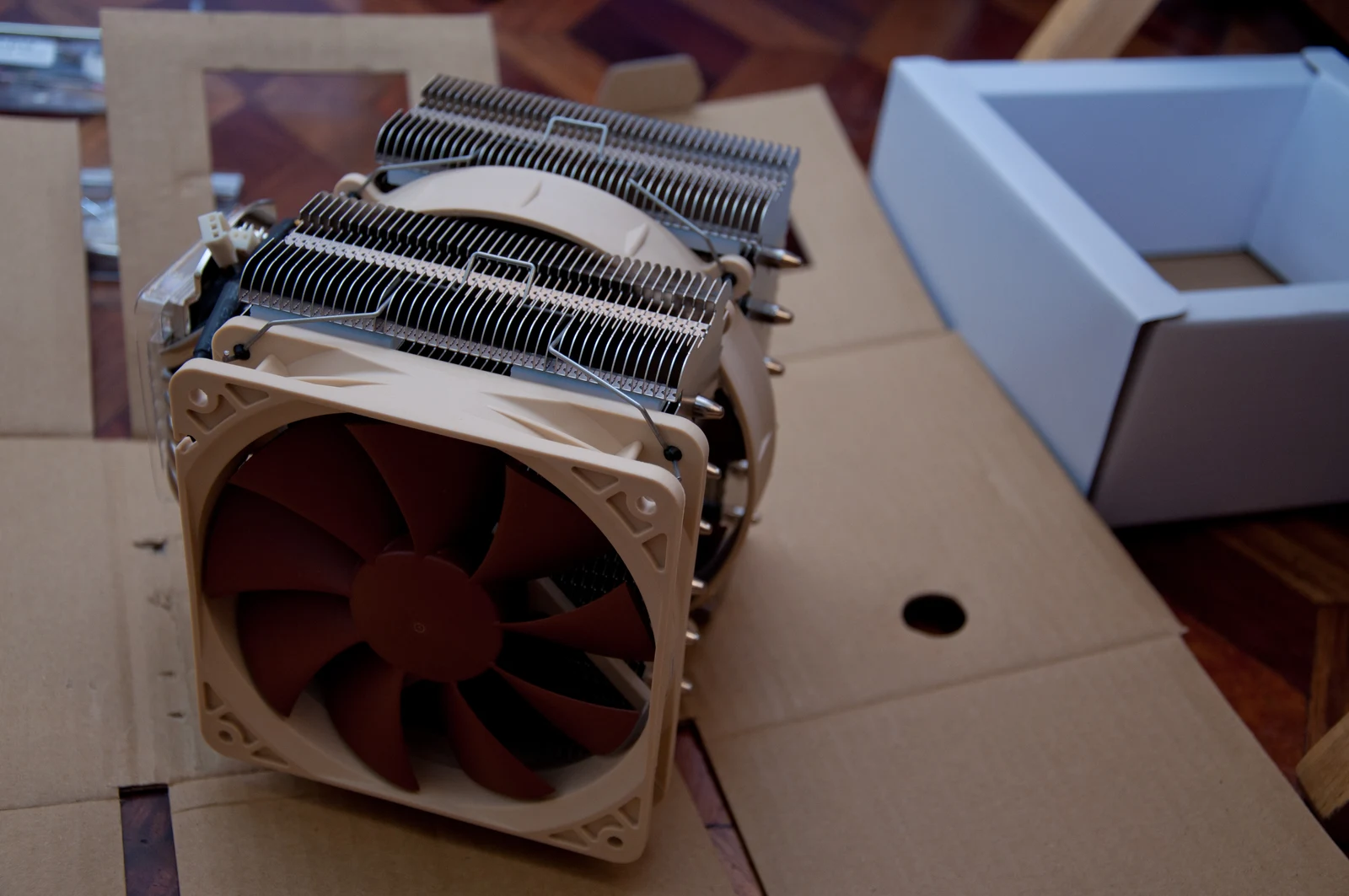
The actual NH-C14s photograph shows a fan beneath a fin assembly; the independent NH-D14 photograph shows a tower with attached fan frames. These are different physical arrangements, not sources of current dimensions or mounting approval. When the proposed cooler document distinguishes heatsink-only height from height with fans, retain the complete arrangement relevant to the memory and case rather than choosing the smaller figure.
A visible fan frame and heatsink are separate parts of the envelope. Memory-module height can constrain supported fan positions for some coolers, but that interaction must come from the exact cooler documentation. Neither photograph shows the selected RAM and host configuration or establishes how far a fan may be moved. Do not transfer another assembly position into a new fit approval.
Use a remainder only as a limited arithmetic check
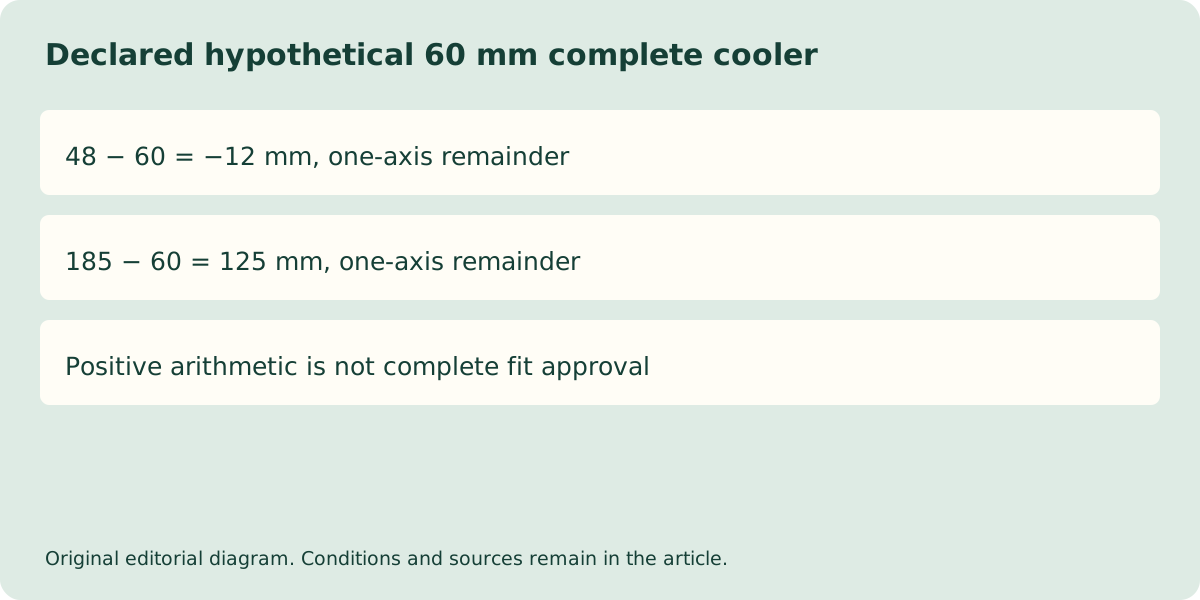
For a declared hypothetical 60 mm complete cooler, subtracting from the listed 48 mm Terra summary gives minus 12 mm. Against the 185 mm Define 7 summary it gives 125 mm. Those are one-axis arithmetic results using an imaginary cooler input, not recommendations or a statement that the 60 mm arrangement actually fits the larger case.
A positive remainder omits mounting support, fan and RAM interaction, access, cables and the other dimensions. An explicit additional reserve can be subtracted in the site’s dimension tool, but the tool does not invent the correct reserve or override the manufacturer. A negative result is a reason to reject that assumed envelope; a positive one is a reason to continue the full document check.
Obtain the supported arrangement before buying
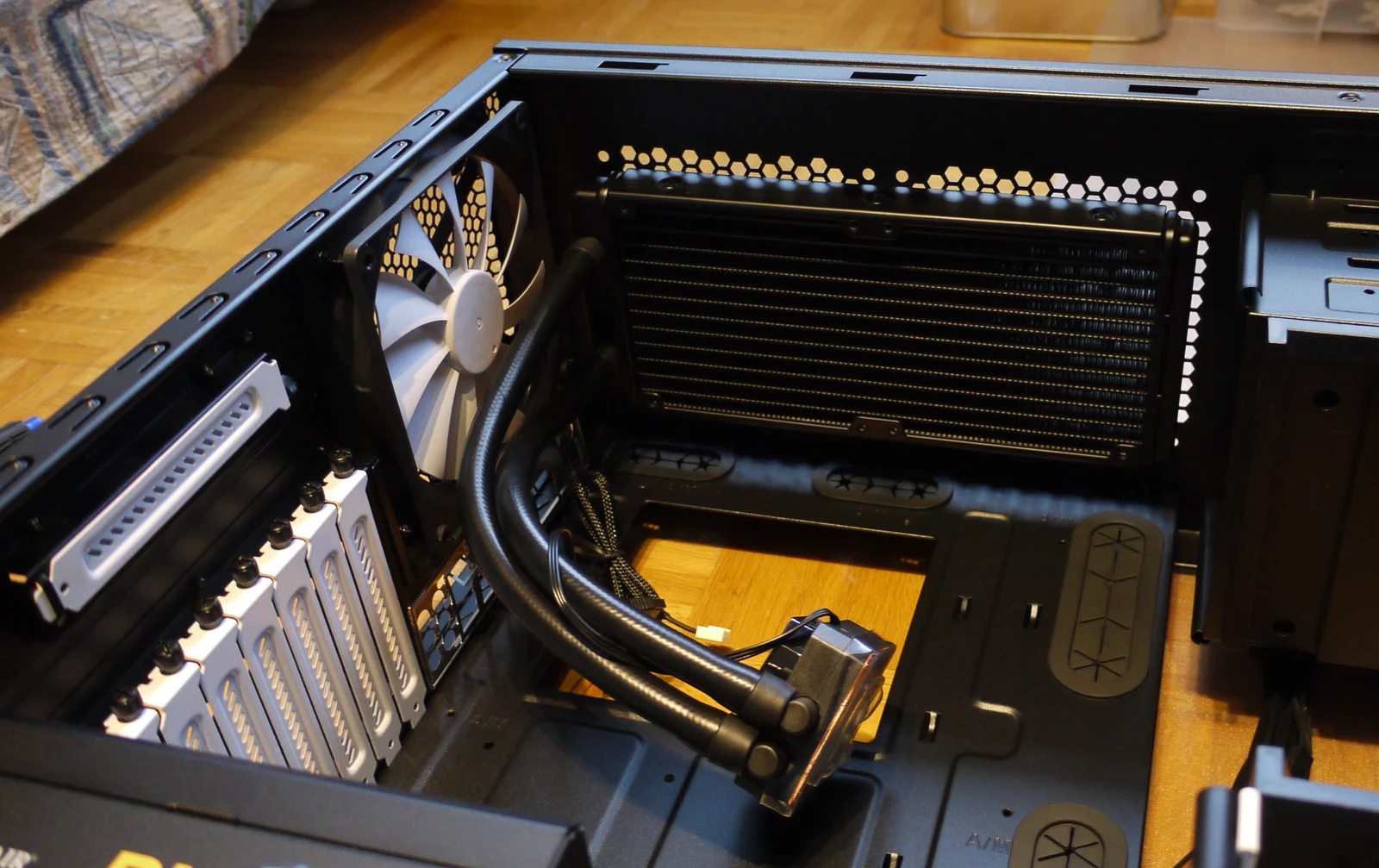
Record the exact case and configuration, board, CPU, memory kit, cooler and mounting revision. Ask the UK supplier to confirm the complete fan arrangement and current cooler support rather than quoting an exterior case dimension. The actual Define R4 detail shows a radiator and case fan occupying mounting space, but this different case supplies no clearance for Terra or Define 7.
No current cooler prices, noise measurements or thermal tests are published here. If current documentation for a proposed cooler cannot be obtained, leave that exact cooler choice unresolved rather than inferring its dimensions from a similar model or an older photograph. The practical answer is to use the exact documented case limit, compare the full supported cooler arrangement, and retain every unresolved interaction before purchase.